
E-MAIL
zipaihui@gmail.com

WhatsApp
+86-19524393944
American Standard Installation Guidelines for Channel Letter Signage (Compliant Version)
These guidelines apply to the installation of channel letter signs, acrylic illuminated signs, and outdoor monument signs for commercial storefronts in North America. They strictly adhere to UL safety standards, the National Electrical Code (NEC), and North American outdoor signage acceptance regulations. Implementation must follow four core principles: electrical compliance, compatibility with wall substrates, waterproofing and drainage design, and comprehensive documentation management throughout the entire process, ensuring efficient on-site construction and successful official approval.
Core Compliance Requirements
All electrical components must be UL certified; outdoor signage must be equipped with a visible power disconnect switch; installation methods must match the existing wall substrate and comply with local fire and electrical codes.
1. Site Inspection
Conduct a mandatory on-site inspection prior to construction: identify wall types (including EIFS exterior insulation systems, plywood substrates, stud frames, solid masonry, hollow walls, etc.); mark reliable anchoring points and avoid hollow or damaged wall areas; verify existing power locations, plan conduit routing, junction box placement, and low-voltage LED cable pathways; recheck installation dimensions, bracket spacing, and cantilever distances. All drawings are non-to-scale (NTS) and must be verified on site; undetermined parameters shall be marked as \"To Be Determined\" (TBD) and confirmed by the client.
2. Materials and Compliance Inspection
Conduct material inspection prior to installation: verify the integrity of aluminum letter shells, sign enclosures, acrylic panels, and Lexan polycarbonate sheets; check color consistency of enamel coatings against Pantone color standards, ensuring outdoor UV resistance and corrosion resistance; prepare primary and secondary junction boxes, remote LED power supplies, and LED modules; all electrical hardware must be UL certified; use wall-specific butterfly bolts, sealed flexible conduits, waterproof sealant, brackets, and decorative covers; ensure drainage holes are clear and unobstructed.
3. Wall Preparation, Anchoring, and Wiring
Clean and prepare the wall substrate; reinforce EIFS wall systems, with large signs requiring T-shaped supports to prevent deformation; install signs using either embedded or cantilevered methods; for hollow walls, only approved butterfly bolts are permitted—standard expansion bolts are strictly prohibited; verify the load-bearing stability of all anchoring components; route wires through sealed flexible metal conduits, ensuring complete sealing at all penetrations to guarantee waterproofing and compliance.
4. Assembly and Installation of Signage
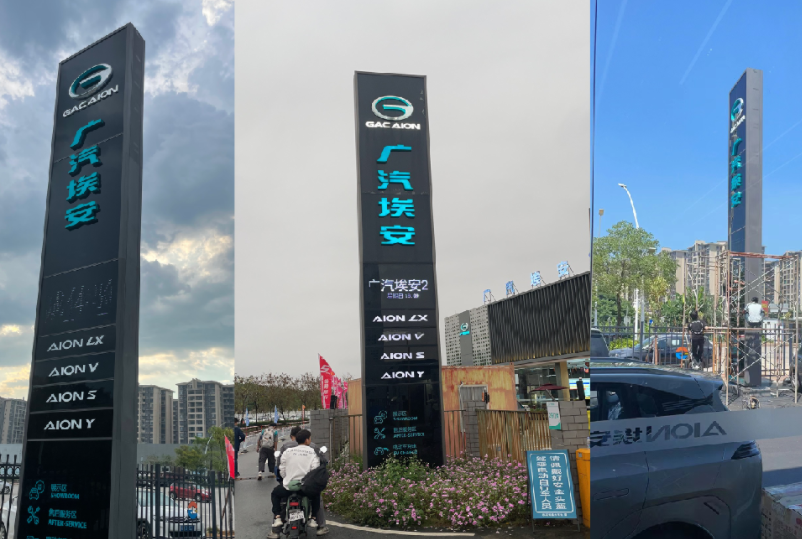
Complete the assembly of aluminum letter shells with channel structures; for outdoor pillar-style signs, pour a concrete base to ensure wind resistance and structural stability; evenly distribute LED modules within the internal light-guiding channels; use remote power supply configuration to reduce heat buildup inside and simplify maintenance; secure acrylic panels using standard interlocking techniques, install decorative covers and accent components to ensure final on-site appearance quality.
5. Electrical Terminal Handling and Waterproofing Measures
Designate dedicated markings for main circuits, separate low-voltage wiring, and standardize terminal connections in junction boxes; install visible disconnect switches for outdoor signs as required by NEC; seal all wall penetrations, cable entries, and panel joints; keep drainage holes clear to prevent internal water accumulation, corrosion, and LED failure; repair damaged enamel coatings to ensure comprehensive weather resistance.
6. Testing, Final Acceptance, and Handover
Conduct power-up testing to verify uniform lighting brightness, absence of flicker, and color consistency; test the functionality of power-off switches and electrical insulation performance to confirm compliance with UL standards; inspect the stability of all anchoring components, supports, and structural elements; submit complete acceptance documentation, including UL certification, electrical records, material reports, and color specifications; complete site cleanup in accordance with local waste disposal regulations; demonstrate system operation and maintenance procedures to the client, confirm warranty terms, and hand over the full project file.
Key Construction Rules and Restrictions
Signage not using UL-certified components or lacking a functional power shutoff switch will not be accepted for final approval; hollow walls and EIFS systems may only use approved fasteners; waterproofing and drainage measures are mandatory and cannot be waived; all compliance documentation must be fully retained for inspection by municipal and fire authorities.